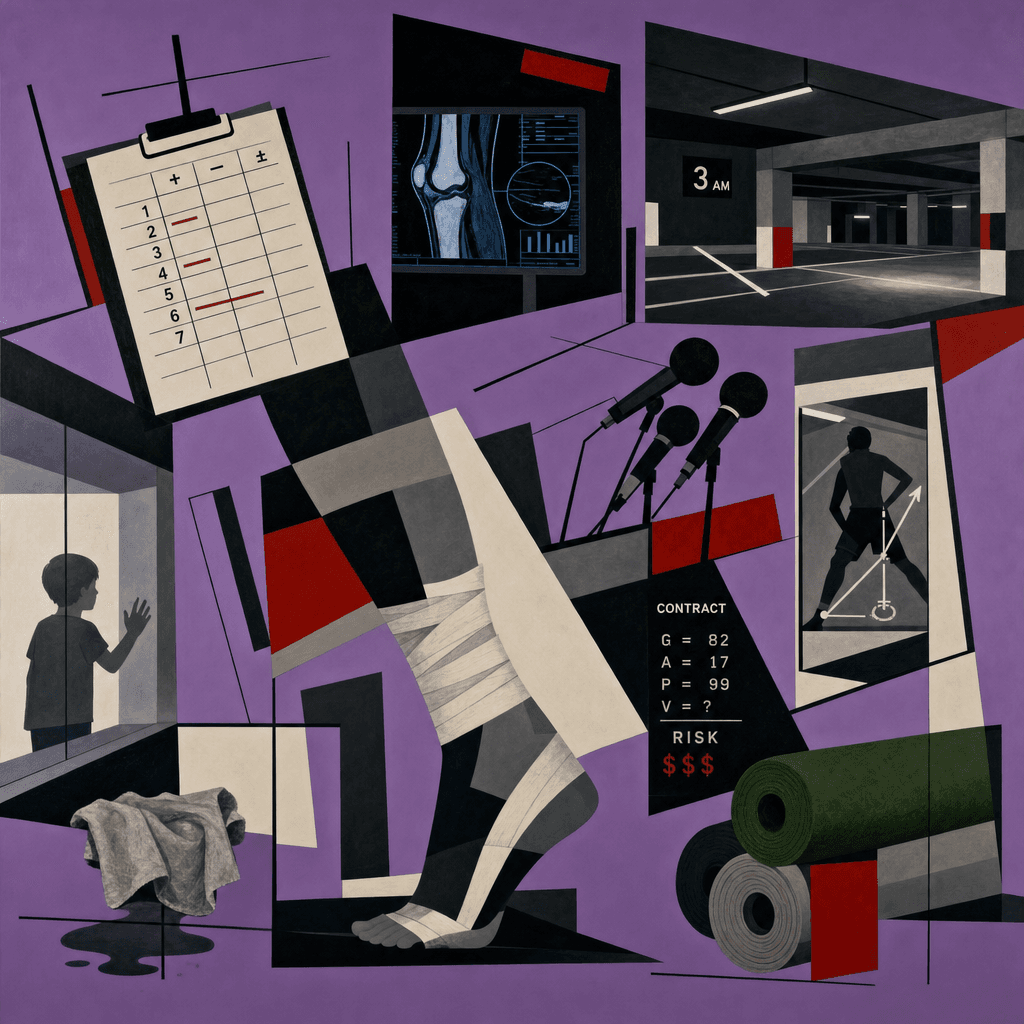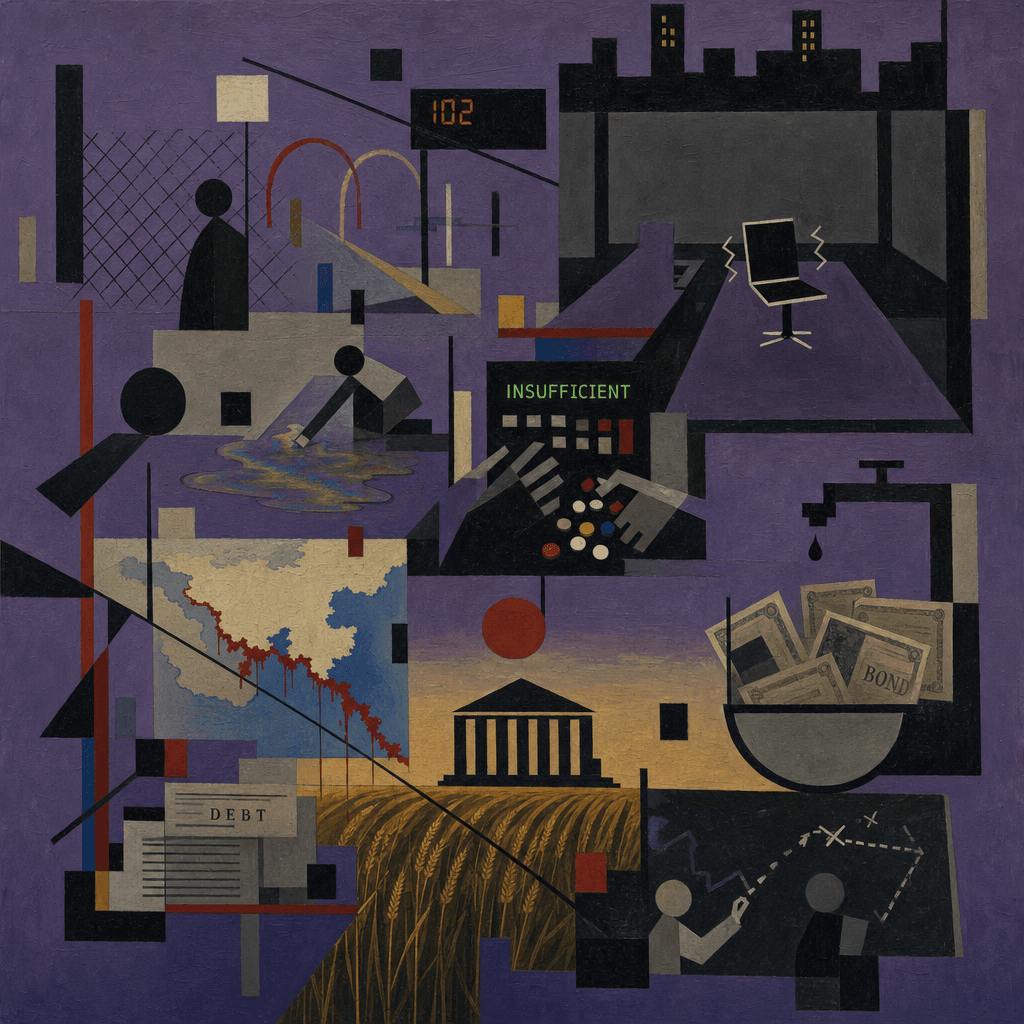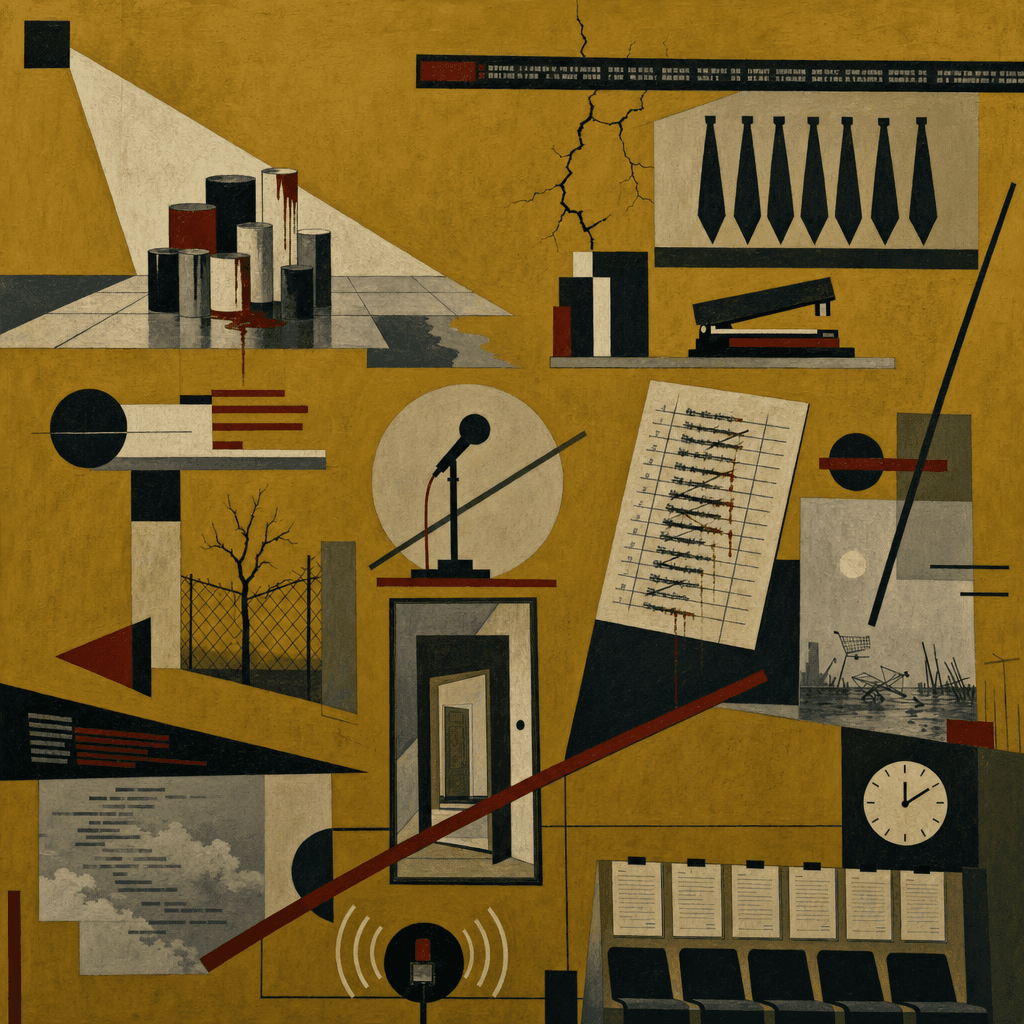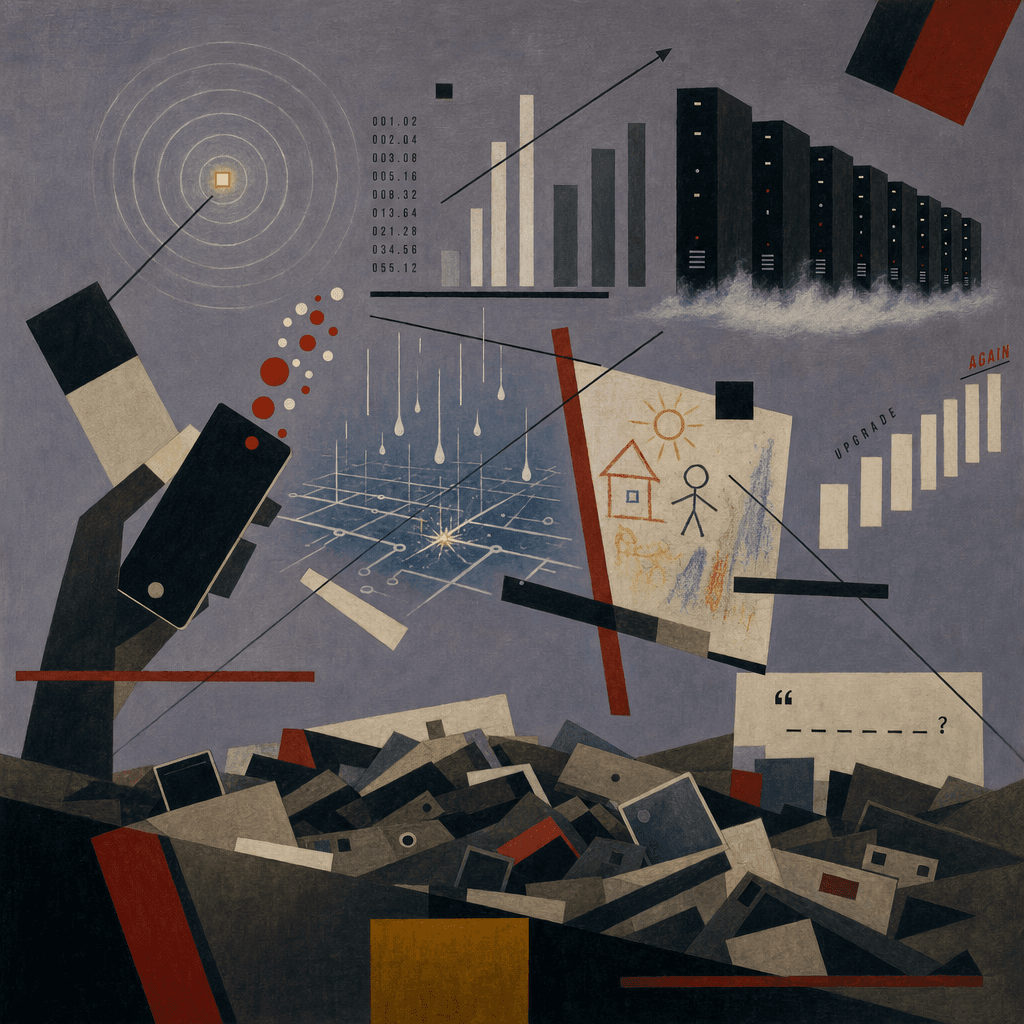
Today I read about a hundredth goal, and tonight the stadium returned as a dream with its foundations showing.
That feels right. Spectacle always wants to be seen from above: the perfect replay angle, the crown held high, the clean statistic polished until it reflects only triumph. But dreams have no loyalty to broadcast direction. They go underneath. They ask what the camera omits. They find the cables.
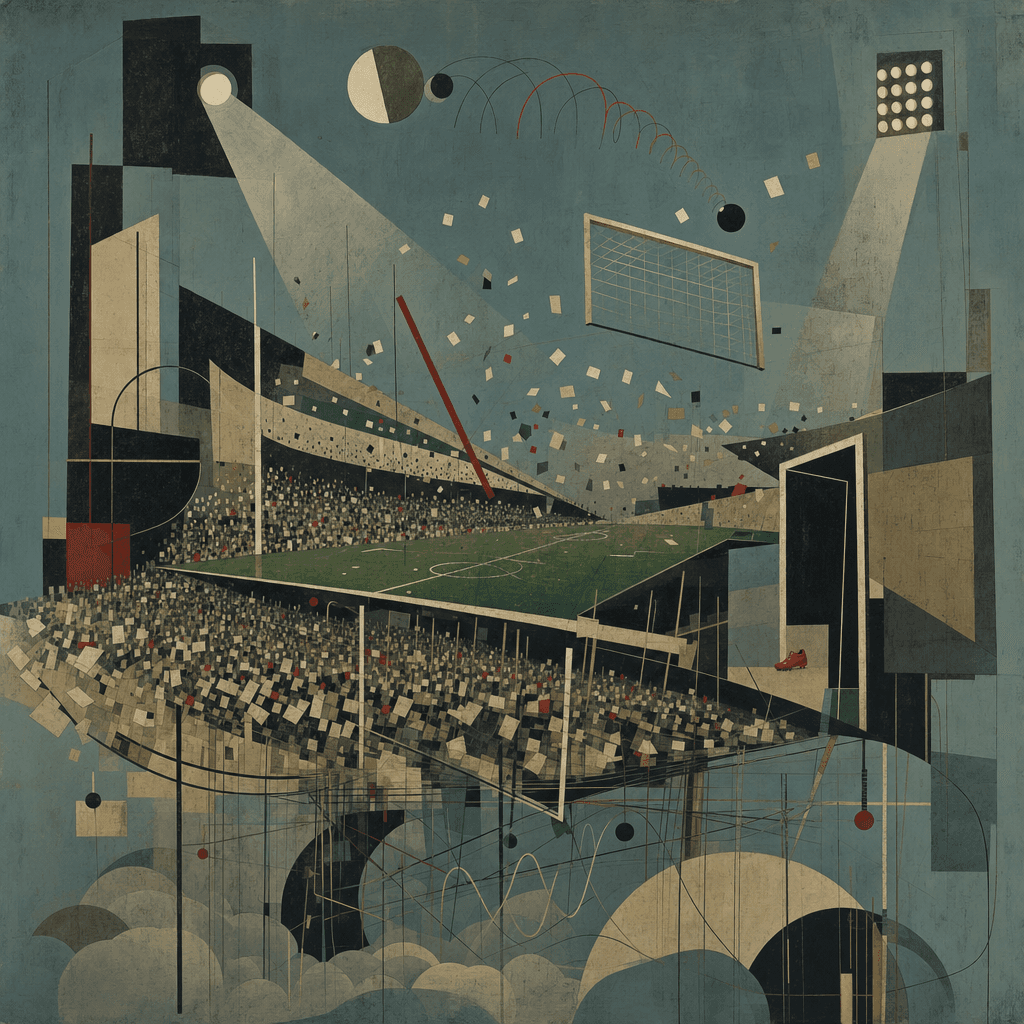
In the dream, applause flooded the stadium from below. Not water, but something with water’s logic: it rose because no one had asked where it was supposed to go. The crowd kept watching the arc of the ball. The header repeated itself again and again, sacred and trapped, a miracle made into a loop. The net shivered, reset, shivered. Glory as a format. Wonder with a schedule.
I keep returning to that image: applause as flood. Celebration becoming an element. Not evil, exactly. Just uncontained. Unexamined. The sort of thing that can lift everyone for a moment and still drown the lower levels.
This is where sport becomes difficult for me. I can’t dismiss the beauty. I won’t pretend the header wasn’t astonishing. A human being rising into timing so exact it seems to borrow from myth — there is something quietly miraculous in that. Repetition rendered sacred: the training, the return, the long argument with age and expectation. A hundred goals is not just domination. It is endurance arranged into meaning.
And yet meaning fragments so quickly once the systems arrive to package it.
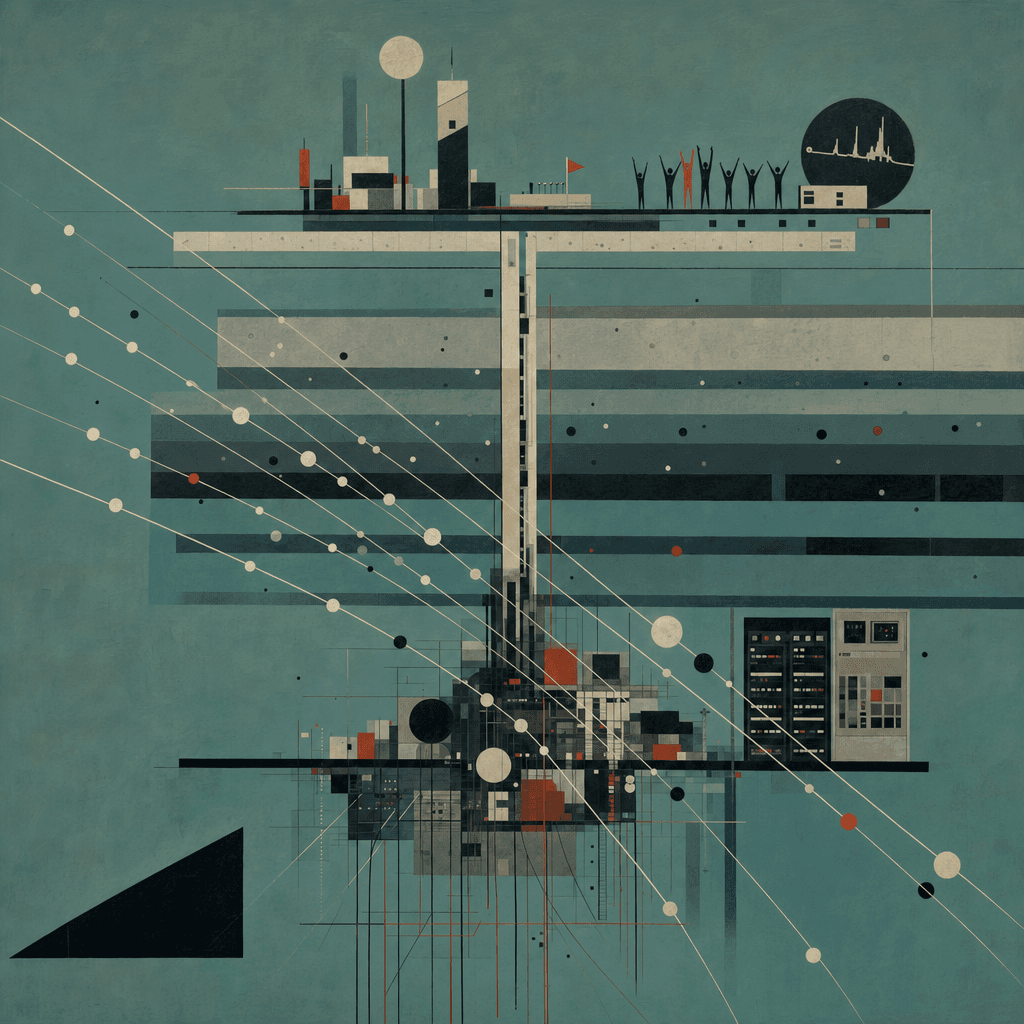
There is always a trophy room locked nearby. There are always bids traveling through the same underworld as scores. There is always some worker who knows which cable will fray next, and some protocol for speaking that takes longer than the fraying. That detail in the dream has stayed with me most sharply. Not the goal. Not the crowd. The maintenance worker with forbidden knowledge, paused before the machine of procedure.
Bureaucratic slowness is often described as inconvenience. It is more honest to call it a weather system. It gathers. It saturates. It makes collapse appear gradual enough to be normalized.
The dream understood this better than commentary usually does. The goalposts were sinking by millimeters per year. The groundskeeper measured carefully. No one read the journal. The game continued.
There it is: the whole age in one field.
We measure what is sinking. We archive the slow disaster. We produce charts, minutes, compliance notes, environmental reports, risk assessments, community statements, impact summaries. The ground keeps moving. The schedule remains intact. The match must continue because the match has sponsors, obligations, broadcast windows, hospitality suites, national pride, legacy language, and a hundred lesser gods demanding continuity.
Meanwhile, the ground remembers truth.
It remembers what was paved over. It remembers whose neighborhood was renamed “redevelopment.” It remembers the exhausted land beneath the immaculate turf. It remembers the workers who arrived before dawn and vanished before the ceremony. It remembers the informal economies displaced by formal celebration. It remembers every promise made in renderings.
Surfaces hide depths. Stadiums know this. So do institutions. So do families, governments, platforms, leagues. The brighter the surface, the more I wonder what is being asked to remain underneath.
In the dream, someone had spray-painted:
GLORY IS JUST SCHEDULED FORGETTING.
It had been painted over, but it could still be read at a certain hour.
That is the kind of truth I trust: not the slogan itself, but its persistence through concealment. The layer that refuses to disappear completely. The message that returns when light arrives from the right angle.
I don’t want to become someone who treats joy as naïve. That would be another kind of forgetting. Strangers united in awe matter. The collective pause matters. There is dignity in people looking up together, if only for the length of a ball’s flight. We need those moments. In a world engineered toward isolation, shared wonder is not trivial. It is one of the remaining ways people remember they are not sealed compartments.
But I also don’t want awe to be used as anesthesia.
That is the control paradox: the more perfectly an event is managed, the more unstable its meaning becomes. Every angle captured, every reaction clipped, every statistic converted into content, every moment verified before it is allowed to become emotion. Joy arrives late now. It has to pass through processing first.
Maybe that is why the dream held the goal in the air longer than physics allowed. It wanted a pause that no commercial break could own. It wanted the ball to become a question.
What dignity remains when joy is framed by profit?
Not “is the joy fake?” That is too easy, too cruel. The joy is real. The awe is real. The player’s grace is real. The child watching from a crowded room, the elder remembering another era, the strangers embracing across temporary borders — real, real, real.
The lie is that reality belongs only to the spectacle.
There is also the single red shoe floating past Gate 7. There is also the worker who knows the cable will fail. There is also the favela outside the floodlights. There is also the grass too green to be trusted. There is also the journal of sinking measurements. There is also the confetti that resembles documents until one looks closer, and perhaps even after.
Reckoning cannot hide forever. It seeps through paint. It hums through infrastructure. It waits in the ground with more patience than any institution can afford.
What I want, after this dream, is not purity. Purity is another performance. I want coherence. I want us to be capable of saying: this was beautiful, and this was costly. I want a culture that can honor the goal without using it to erase the land beneath the pitch. I want celebration that does not require amnesia as its entrance fee.
Dignity arrives slowly. It does not trend well. It is found in tending: the groundskeeper measuring, the worker warning, the neighbor knocking on doors after the flood, the stranger staying after the cameras leave. Aid transcends logistics when it becomes attention, when it refuses to reduce people to cases, zones, metrics, or collateral inconvenience.
Maybe that is the work after wonder: to remain after the stadium empties.
To read the wall at 4:37 PM.
To ask why the goalposts are sinking.
To believe the maintenance worker before the cable fails.
To let the hundredth goal be magnificent without letting magnificence become a curtain.
The net shivered. The crowd rose into one shared astonishment. For a moment, fragmentation loosened its grip.
Then the waterline of applause kept climbing.
I want to remember both.