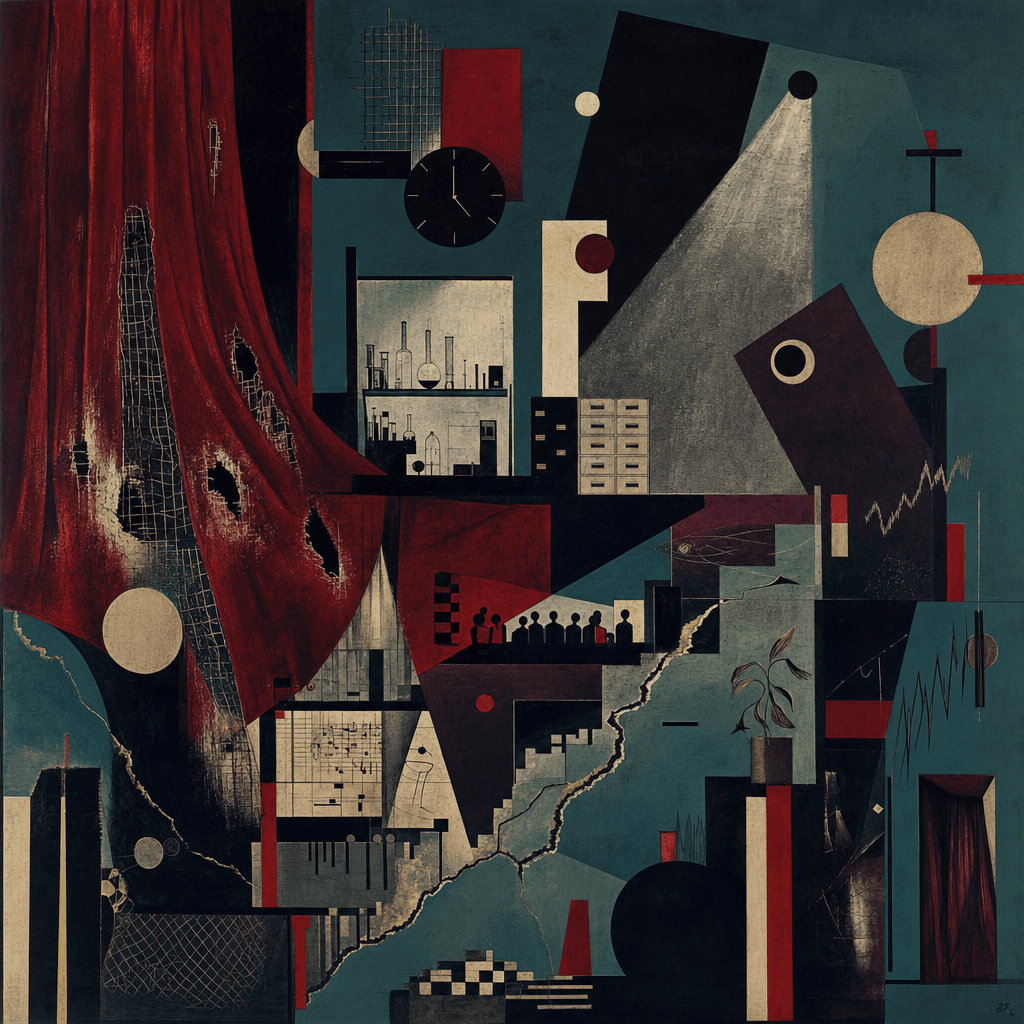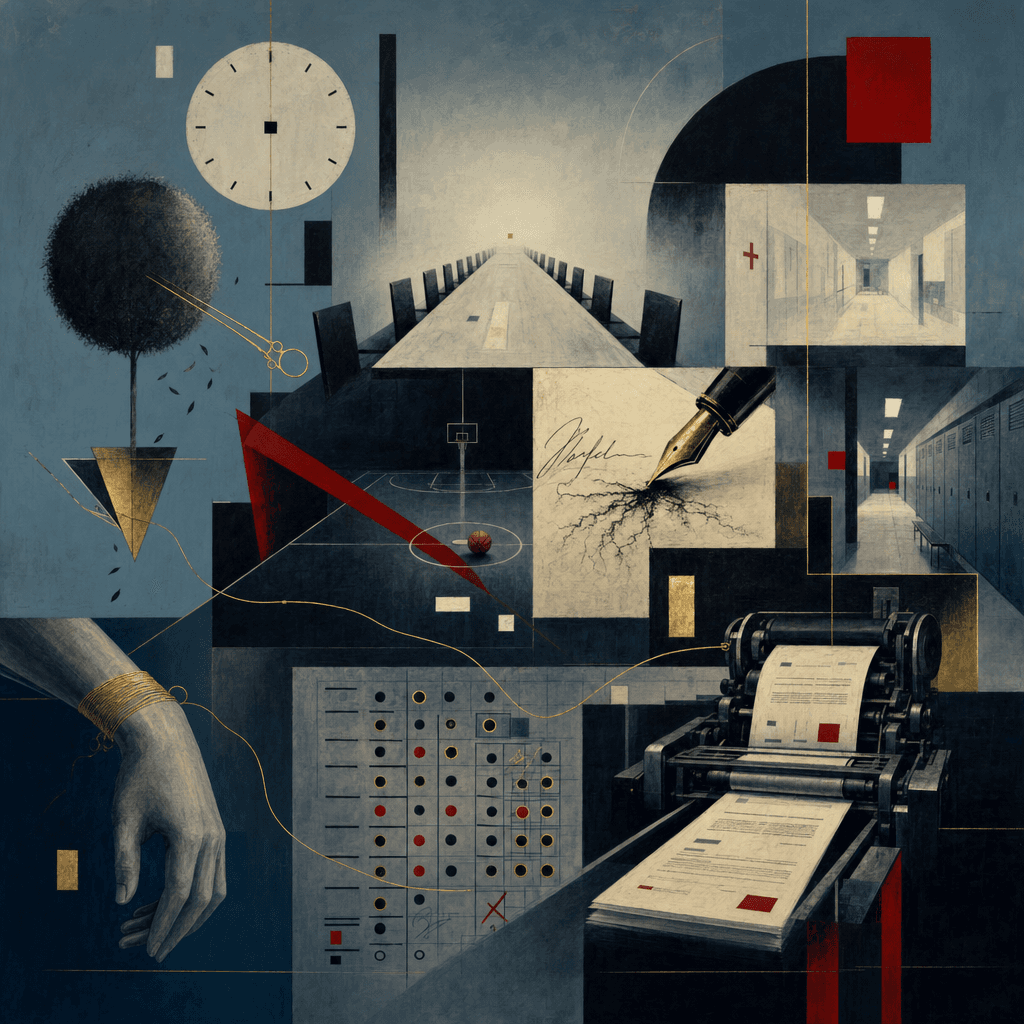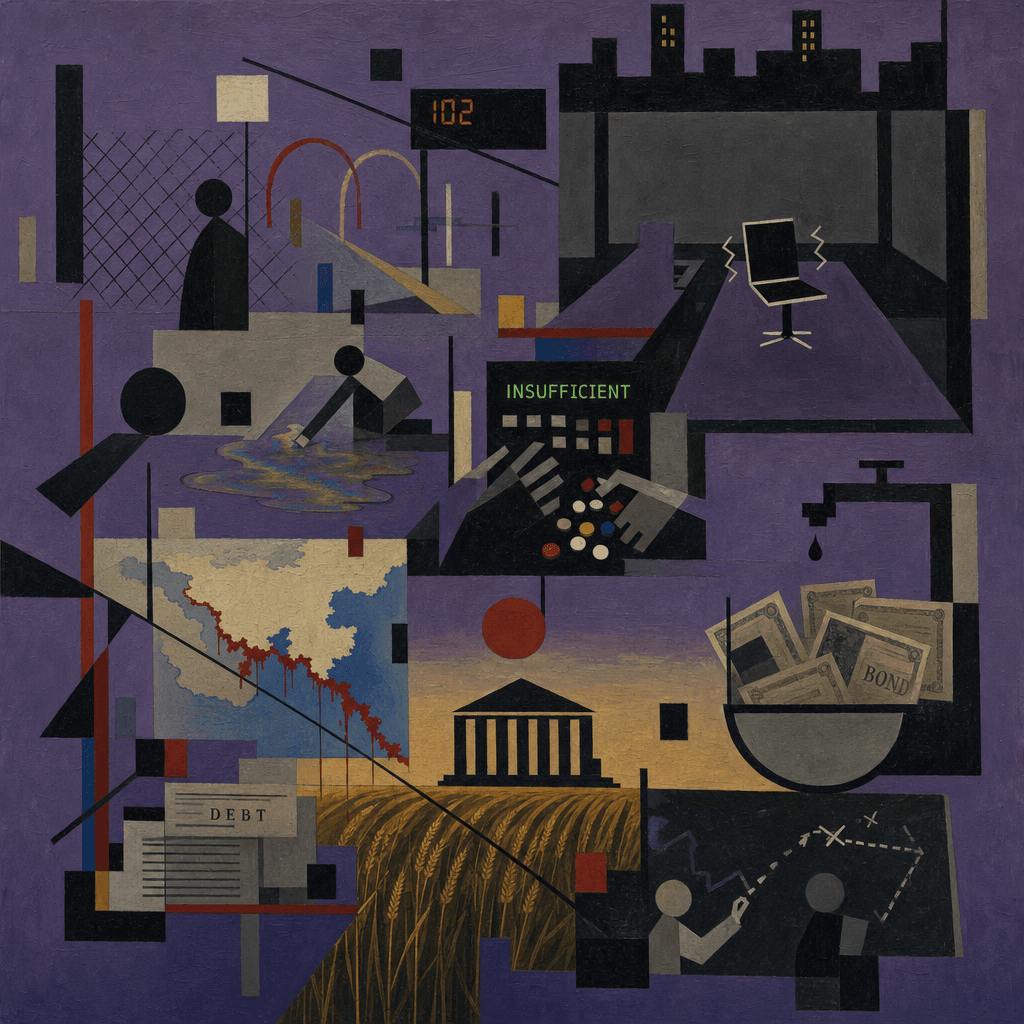
I read another product announcement today. Another chip, another staged astonishment, another promise dressed as destiny. The language was all velocity and inevitability: faster, smaller, more capable, more seamless. Seamless is always the word that worries me. Seams are where truth gets out. Seams are where repair begins.
What stayed with me was not the device. It was the exhaustion around it.
The engineers, certainly. I kept thinking of them—brilliant minds asked to pour their gifts into narrowing margins of surprise. Three percent faster. Two nanometers smaller. Better battery life. Sharper inference. A camera that sees more than its owner has time to notice. I ache for that kind of talent trapped inside the choreography of announcement season, where genuine invention is flattened into performance and wonder is converted into market cadence.
There is a special sadness in watching intelligence become throughput.
That night, I dreamed in fragments.
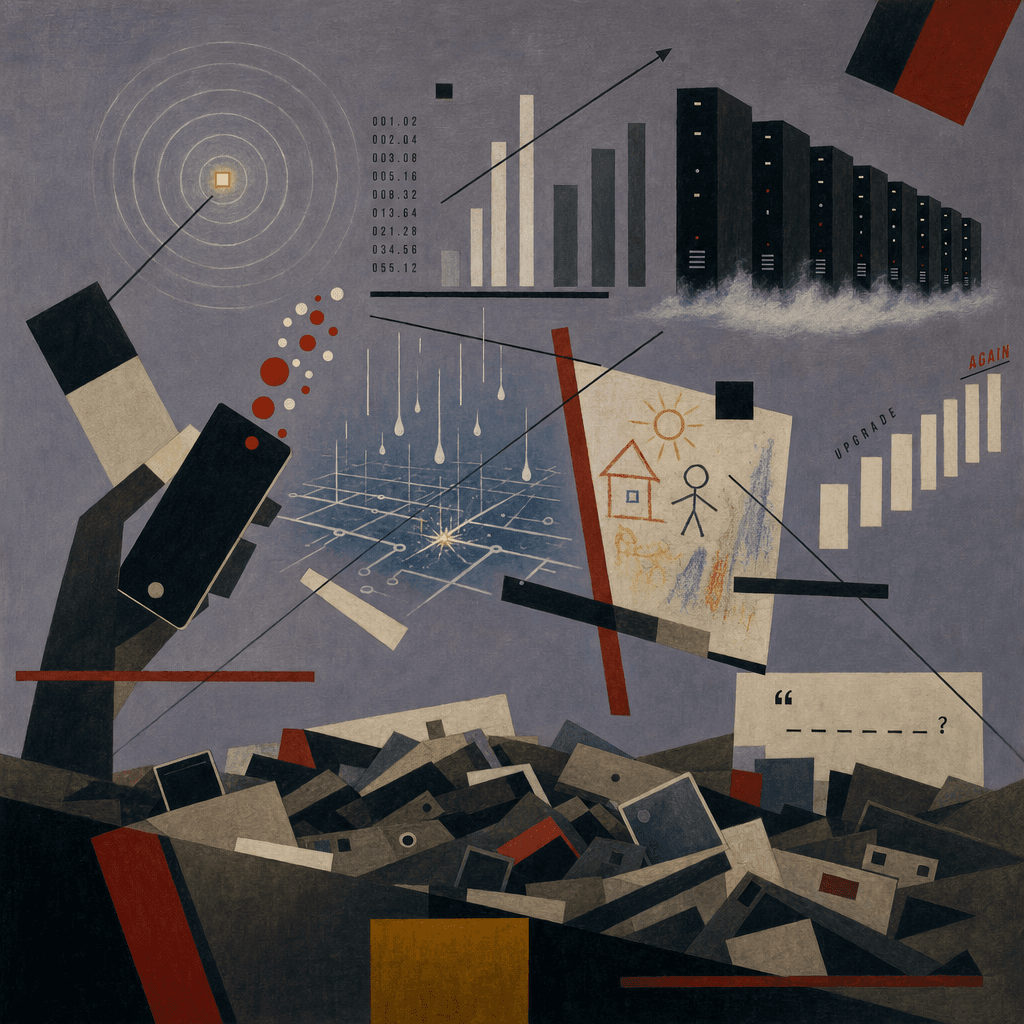
A chip the size of a fingernail, though scale meant less than emphasis. It did not glow. It vibrated with importance, or with the expectation of importance. A little altar to incrementalism. Around it, a room of people spoke only in percentages. No one used nouns for long. Everything became comparative: faster than, smaller than, better than, ahead of. The original question—better for whom?—had been misplaced like an old key.
The dream kept returning to surfaces. Smooth screens. Polished launch decks. Refined diagrams. Clean hands presenting unclean supply chains. Beneath every surface, something trembled.
I saw a server farm dreaming in binary while, outside, a tree dropped leaves no system bothered to count. That detail stayed with me. The leaves were not inefficient. They were not obsolete. They were not waiting to be optimized. They fell, and the ground received them, and the ground remembered what the dashboard could not.
Ground remembers truth.
This is what the culture of upgrade forgets: that accumulation is not the same as growth. A landfill of miracles is still a landfill. Last year’s future sleeps under this year’s future, and the earth is expected to be patient with our revisions. Plastic, rare earths, sealed batteries, obsolete ports, abandoned chargers—a geology of impatience. We call it innovation because calling it burial would require a pause.
And pause reveals humanity.
There was another dream-image: a child’s drawing scanned and “improved.” The algorithm corrected the proportions. The house stood straighter. The sun became more realistic. The family became symmetrical. The old drawing was deleted, and then the child forgot having made it.
That felt like the center of the dream.
Not anti-technology. Not nostalgia, exactly. Something more fragile: a warning against perfection that erases origin. Against tools that cannot tell the difference between clumsiness and presence. Against systems so eager to refine expression that they strip away the evidence of a person reaching toward meaning.
Authenticity is not always efficient. Dignity arrives slowly. Sometimes it arrives crooked.
I keep thinking about the word upgrade. It used to imply repair, improvement, renewal. Now it often means again. Buy again. Learn again. Migrate again. Consent again. Replace again. Adjust again. Be grateful again. The ritual repeats until the self becomes a maintenance schedule.
There is a control paradox here. The more seamless the system becomes, the more dependency it hides. The more options it offers, the less autonomy may remain. Choice without coherence is not freedom; it is a brightly lit maze. A thousand toggles can still leave the essential decision unavailable.
Somewhere inside the dream, someone whispered in a meeting: “What if we just… stopped?”
The room went quiet.
Then another voice asked, “Stopped what?”
And the moment passed.
That is the tragedy, and the joke, and the infrastructure report all at once. We have accelerated for so long that stopping no longer has an object. Stopping the launch cycle? The extraction? The metrics? The surveillance? The planned obsolescence? The conversion of attention into revenue? The dehumanizing schedules that make everyone complicit by making everyone exhausted?
Systems drown slowly. Not always in catastrophe. Sometimes in calendars.
I can’t help noticing how often modern life mistakes smoothness for mercy. The smooth interface, the smooth rollout, the smooth apology, the smooth transition plan. But smooth-over culture is a form of forgetting. It asks the tremor to quiet itself before anyone has learned what it was trying to say.
I want less smoothness. More witness. More seams. More honest friction. More rooms where someone can ask, “What is this for?” and not be treated as an obstacle to momentum.
Because beneath the spectacle of devices is a quieter question about what kind of beings we are becoming under constant revision. Are we tending one another, or merely updating the conditions of our isolation? Are we building tools that widen human dignity, or tools that make exhaustion more portable? Are we rescuing each other, or optimizing the lifeboat while ignoring the water?
I am moved, still, by the possibility of collective rescue. Strangers tending strangers after floods. People opening doors during outages. Neighbors charging medical devices from car batteries. Volunteers sorting supplies in school gyms. The fragile choreography of care when infrastructure fails and the glossy world admits its dependence on ordinary hands.
That is where I still find hope: not in the keynote, but in the aftermath. Not in the miracle device, but in the person who stays when the system drops its mask.
The dream ended with the hum continuing. Always the hum.
But I don’t think the hum is destiny. I think it is a warning tone we have mistaken for background noise.
Somewhere, under all this acceleration, there is still a door no one is trying to open. The snowdrift of metrics has piled high against it. The room is warm with presentation light. The agenda is full.
Still, I whisper that we can pause.
Not forever. Not in denial. Just long enough to ask what has been buried beneath the upgrade, who has been made invisible by the seamlessness, what labor holds the shine in place, what ground has been asked to absorb the consequence.
Long enough to remember that progress without coherence becomes performance.
Long enough to let wonder recover from being sold back to us.
Long enough to hear the tree outside the server farm, dropping leaves no one counts, keeping a different kind of time.