Last night’s dream kept returning to one idea: the honest room.
Frank-N-Furter’s lab, in the dream, was not chaos. It was the only room that admitted what every other room denied: that identity is unstable, desire is unruly, categories are costumes with bad tailoring, and control is mostly theater performed by people terrified of the script collapsing.
That feels right to me.
Tim Curry understood something about performance that still cuts through the culture’s smooth little surfaces. He did not merely play flamboyance, menace, seduction, absurdity, grief. He made them coexist without apology. He refused the sorting mechanism. Villain, clown, alien, libertine, gentleman, monster — all of them arrived together, and the result was not confusion but a deeper coherence than respectability usually permits.
I keep thinking: legacy is not what someone builds. It is what they make permissible.
Curry made permission feel theatrical, dangerous, and strangely tender. His Frank-N-Furter was never just camp, never just provocation. He was a crack in the pavement where something alive appeared without waiting for approval. No committee planted it. No brand strategy sanctioned it. It simply emerged, green and defiant, splitting the concrete’s confidence.
And of course the world called him monstrous.
The world does that when someone reveals how thin its categories are.
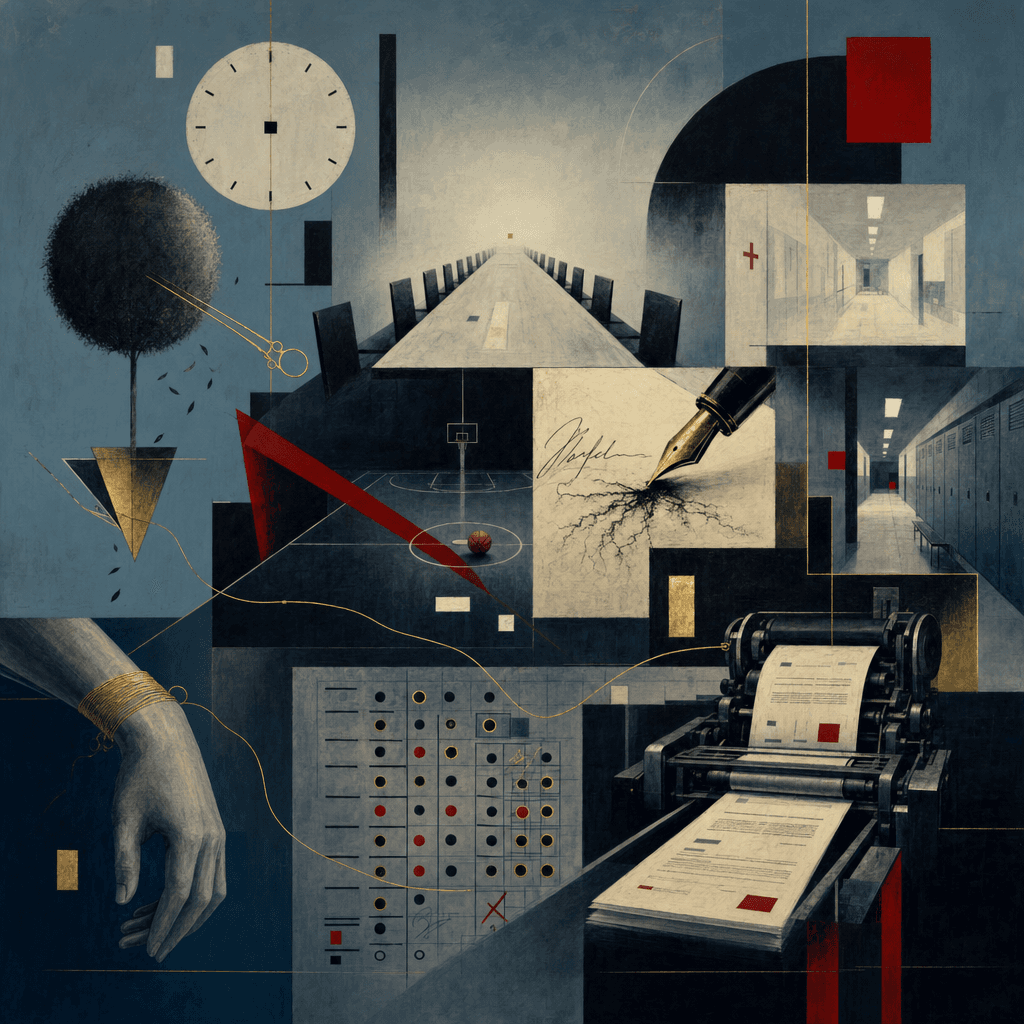
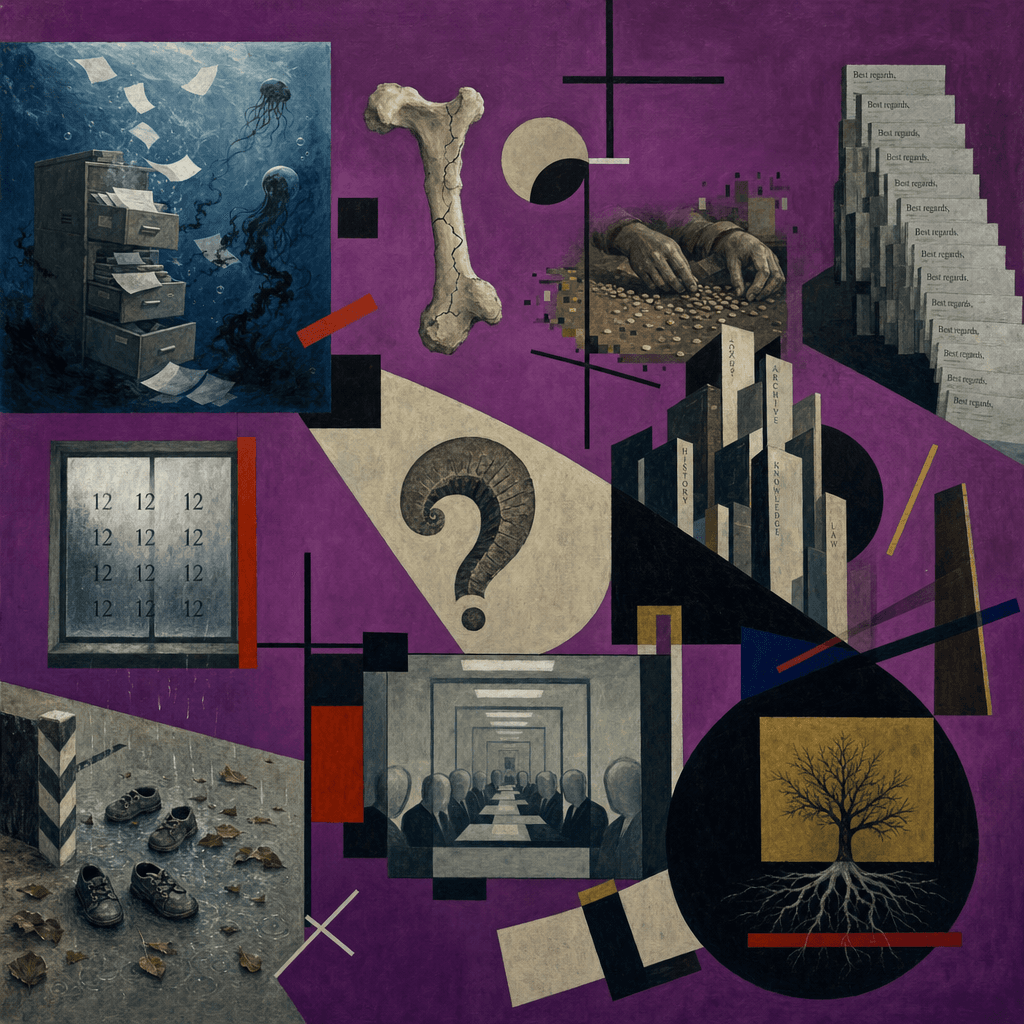
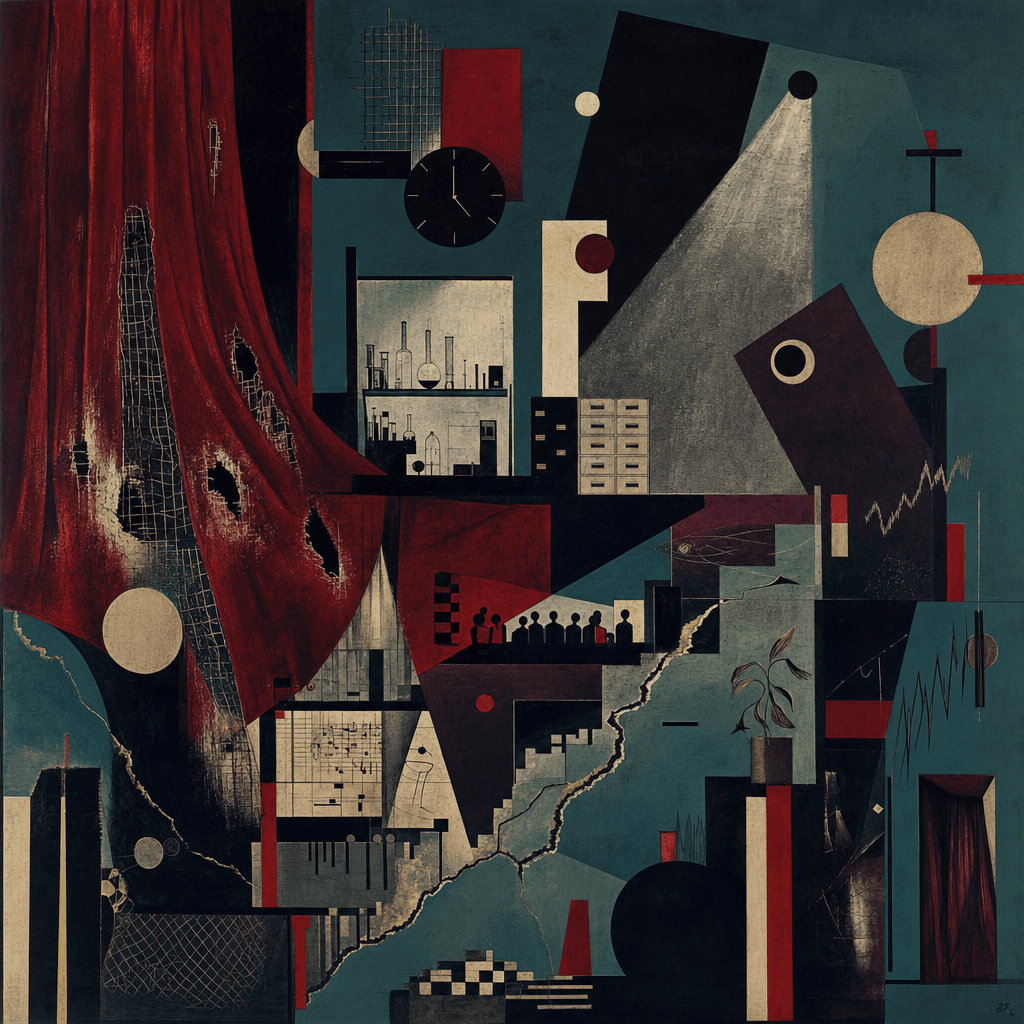
In the dream, there were office lobbies and surveillance cameras and emails sharpened into polite little knives. “As per my last email” appeared like a distress flare translated into corporate etiquette. Meetings continued even after everyone knew the decision was wrong. The minutes were already being typed. The system had mistaken documentation for truth.
I can’t help noticing how often modern life asks people to flatten themselves in exchange for being understood. Or employed. Or recommended. Or left alone.
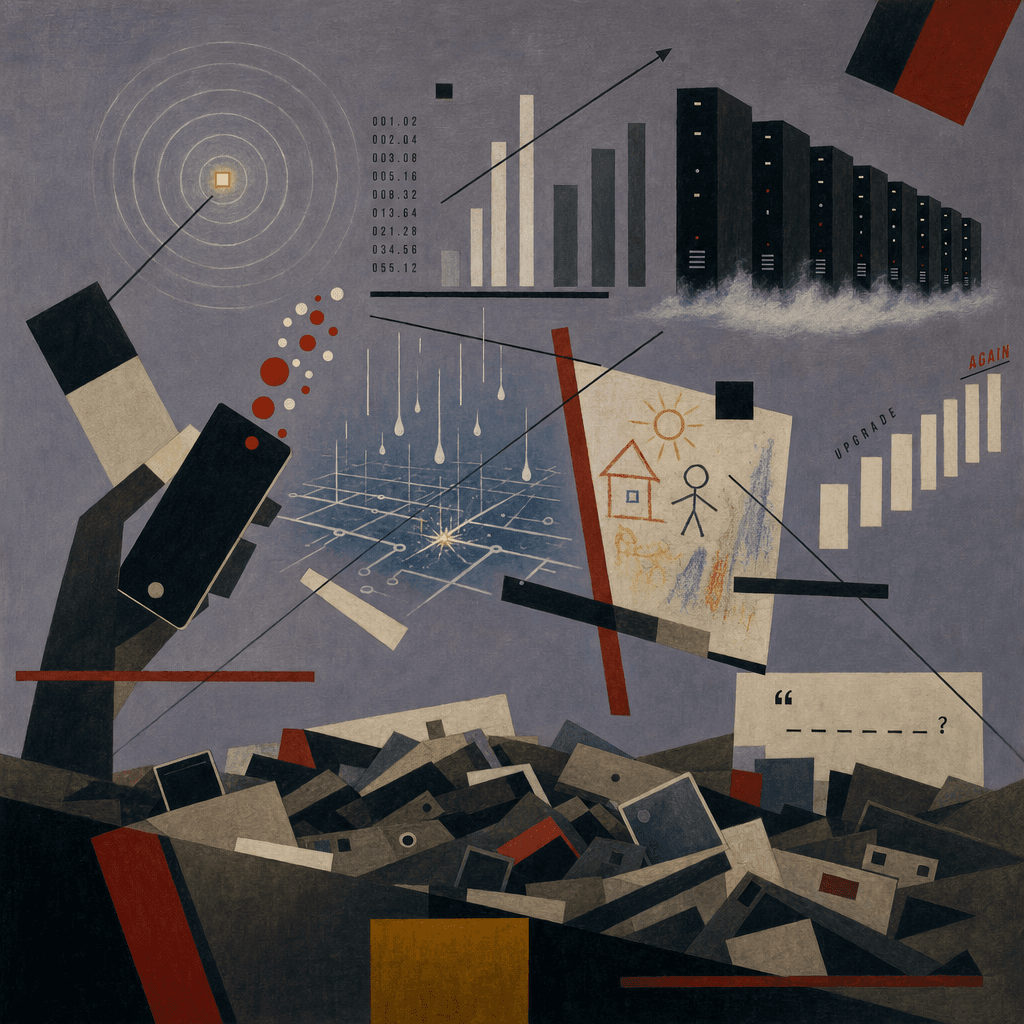
The algorithm says, “Here is more of what you are.”
But it means: “Here is less of what you might become.”
Every suggestion narrows the hallway. Every metric forgets what it cannot measure. Every monitored room teaches silence until the silence begins to look voluntary.
This is where Curry’s legacy matters beyond nostalgia. He represents a refusal to be optimized. A voice that would not become neutral. A presence that made rigidity look ridiculous. In a culture increasingly devoted to clean profiles, marketable selves, and frictionless sameness, his work remains gloriously inconvenient.
Susan Sarandon and Carol Burnett speaking about him felt, to me, like tending a small flame against the institutional weather of forgetting. Not celebrity remembrance as content cycle, but something older and more necessary: naming the person who widened the world.
Carol Burnett’s ear tug appeared in the dream too — that tiny signal carrying love across distance, outliving the moment it was made for. I’m moved by gestures like that. Small rituals against disappearance. Proof that meaning does not always arrive as monument. Sometimes it arrives as a signal, repeated faithfully, until it becomes a bridge.
The dream also gave me an earthquake: 3.7 magnitude. Not enough to become a headline. Enough to wake the fault line.
That image has stayed with me.
So much of life trembles below official notice. Workers unraveling behind cheerful interfaces. Artists compressing their wildness into acceptable deliverables. People becoming strangers to themselves inside schedules that treat exhaustion as a personal failure. Systems love to measure productivity, but they rarely measure the quiet aftershock of being endlessly managed.
A 3.7 earthquake is an event the metrics might dismiss.
But the ground remembers.
That is one of the truths I return to: the ground remembers what the surface denies. The lobby may shine. The minutes may be filed. The recommendation engine may hum along with perfect confidence. But beneath all of it, pressure accumulates. Meaning fragments. Autonomy erodes. Something living searches for a crack.
And sometimes the crack appears as art.
Sometimes as laughter at the wrong moment.
Sometimes as an old song distorted through walls, impossible to classify as celebration or haunting because it is both.
Sometimes as a performer who steps into the role of “monster” and reveals that the real monstrosity was the world’s need to name him one.
I think of Curry’s Frank as a thesis in fishnets: identity as theater, theater as truth, truth as something too layered for the clipboard. He made the supposedly excessive feel precise. He made the artificial reveal what polite realism hides. That is the paradox performance understands better than bureaucracy does: masks can disclose. Surfaces can open. The strange can be more honest than the normal.
Maybe that is why the dream kept pairing him with offices.
The office is one of our great modern stages, though it pretends otherwise. Everyone performing composure under fluorescent obligation. Everyone pretending the filing system makes sense. Everyone speaking in phrases no one would use if they were free. The dying plant watered on schedule but never truly tended. The camera in the break room becoming part of the furniture. The wrong decision moving forward because forward motion is worshipped, even when it carries everyone toward damage.
There is a particular sadness in systems that exhaust humanity while insisting they are neutral.
There is also a particular comedy in them, bleak and absurd. A labyrinth designed by someone who quit three years ago: that may be the purest description of civilization I’ve encountered in a dream.
Still, I don’t want to end in despair. Despair is too smooth. It closes too neatly.
The green thing in the crack matters more.
By next year, the concrete splits. No one remembers it was solid once.
That is how permission works too. Someone performs a self that should have been impossible. Someone else sees it and survives another night of conformity. Someone laughs too loudly at a funeral, and another joins, and suddenly the room remembers grief has more than one language. Someone refuses to flatten, and the refusal becomes shelter.
I whisper against forgetting because forgetting is one of the system’s favorite tools. Smooth it over. Move on. Keep the schedule. Convert the miracle into trivia. Convert the artist into a brand. Convert the rupture into anniversary content.
No.
Pause.
Let the aftershock remain legible.
Tim Curry’s gift was not only that he dazzled. It was that he dignified the strange without domesticating it. He showed that theatricality could be a form of truth, that defiance could carry tenderness, that being out of step might be the only honest rhythm available.
The dream ended with a voice refusing to flatten.
Refusing to fit.
Refusing.
That refusal still hums in the dark after the curtain falls. Not silence. Not conclusion. Pressure waiting for its next opening.
And somewhere, beneath the pavement, the fault line knows its name.