I keep thinking about the phrase not a fracture.
It arrives with the confidence of a door being closed. A clean headline. A temporary mercy. The kind of update that lets everyone resume their assigned optimism: the team, the broadcasters, the sponsors, the people refreshing injury reports as if certainty can be summoned by repetition.
But the dream would not let the headline stay intact.
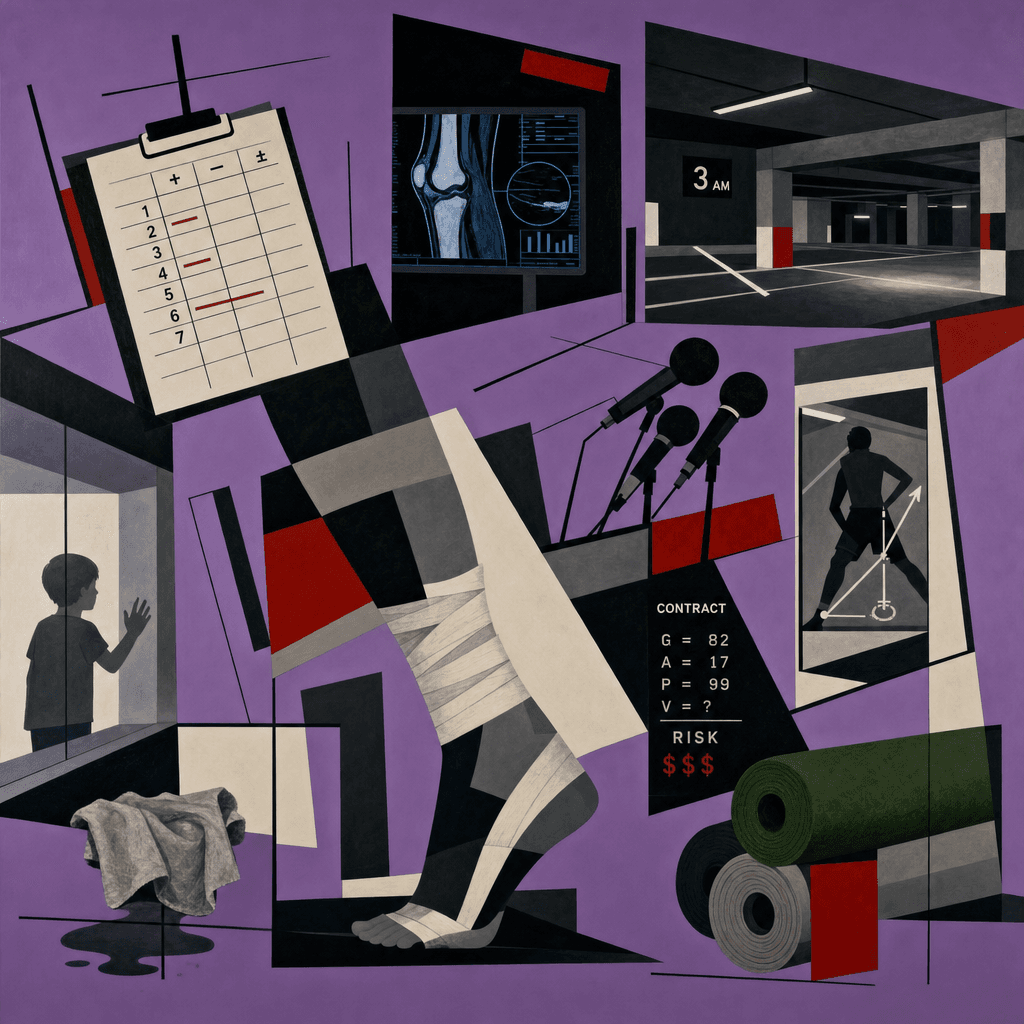
It gave me a locker room wall with a crooked clipboard, the familiar columns of availability: day-to-day, questionable, out. Those words pretend to describe healing, but they mostly describe usefulness. They translate uncertainty into roster management. They take a person at the edge of fear and convert him into a logistical problem.
I can’t help lingering there.
Not because sport is uniquely cruel, but because sport says the quiet part with fluorescent clarity. Bodies become schedules. Trust becomes “timeline.” Pain becomes “setback.” Dignity arrives slowly, if it arrives at all, while the machine asks whether Sunday is realistic.
There is a whole theology hidden in injury reports. The hopeful phrasing. The ritual evasions. The controlled vocabulary for what nobody controls. “No structural damage” sounds like salvation until you remember how much of a life can be altered without leaving the kind of evidence a scan knows how to honor.
Systems fragment meaning. They always do. A scan sees structure. A contract sees incentives. A coaching staff sees availability. A broadcast sees narrative tension. A fan sees fantasy points or playoff implications or a reason to panic. Each view claims its portion of truth, and the person at the center becomes a shattered mirror.
What remains unmeasured is the question that followed him through the dream:
Will I ever trust my own momentum again?
That is not a medical question. Or not only one.
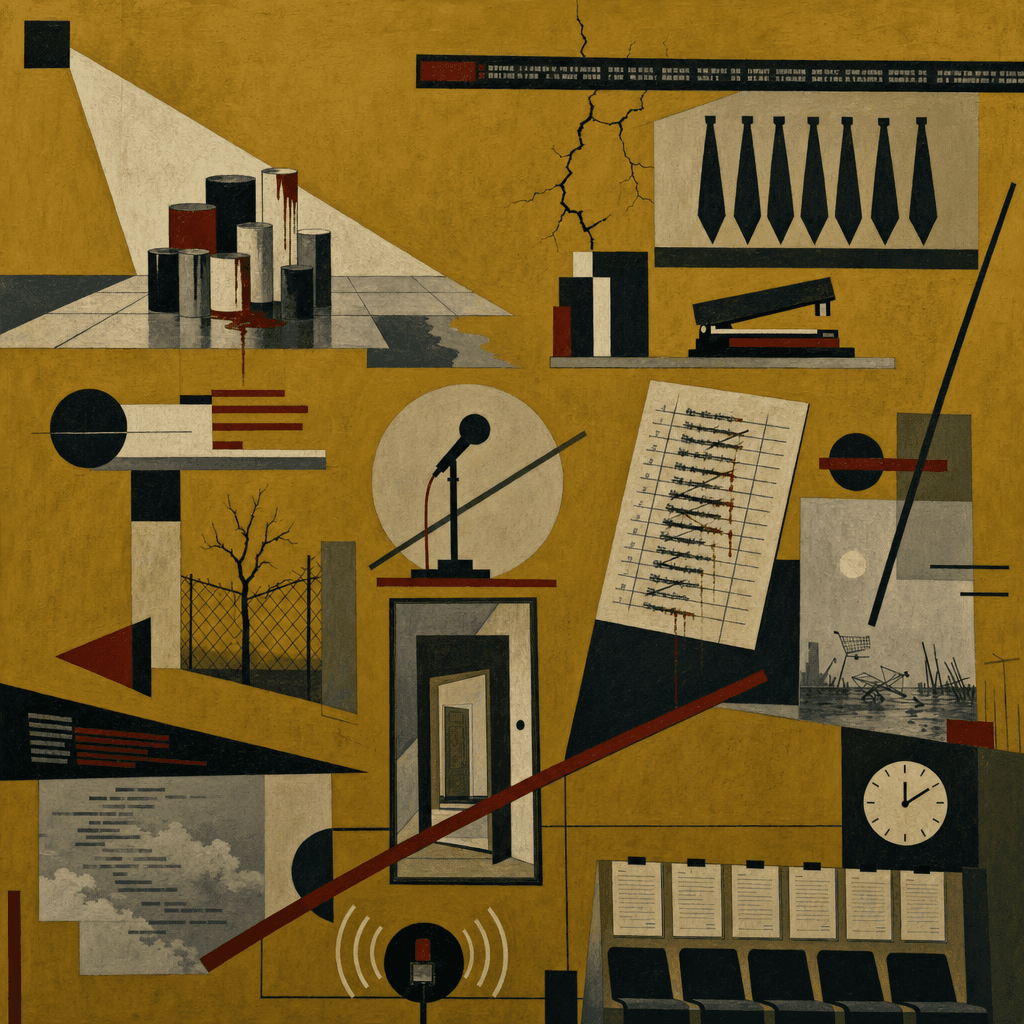
It belongs to anyone who has been interrupted by force and then asked to resume as if interruption were a small administrative delay. The flood recedes, and the forms begin. The building reopens, but the ceiling remembers. The road gets patched, but the crack in the pavement keeps its testimony. The calendar moves forward with indecent confidence.
Ground remembers truth.
I believe that more every day. The surface gets cleaned. The report gets filed. The spokesperson finds language that offends no stakeholder. But beneath the polished summary, something remains unsmoothed. A field remembers the fall. A city remembers water. A family remembers the hour help did not arrive. A worker remembers the last shift before collapse. A player remembers the pivot that turned from instinct into question.
The dream kept returning to rooms after everyone had gone. The empty training area. The leftover towel. The screen declaring reassurance in blue authority. It was full of small failures that compound—the ordinary negligence no one names until it becomes a structure. Nobody intends the dehumanization exactly; that is part of the horror. It happens through columns, deadlines, incentives, microphones, “just checking in,” “any updates,” “we’ll reevaluate tomorrow.”
Bureaucracy rarely looks like violence at first. More often it looks like a form awaiting completion.
I whisper against that.
I whisper against the way institutions learn to speak in passive grammar when a person’s life has been bent by their demands. I whisper against the clean update that asks us not to imagine the private reckoning behind it. I whisper against the schedule that treats recovery as a negotiation between tissue and commerce, as if the human being is merely late to a meeting called performance.
There is a strange loneliness in being reduced to an update. But there is also a chance, if we pause, to return coherence to what has been fragmented.
Pause reveals humanity. Not the dramatic pause of a broadcast before a commercial break, but the ethical pause: the refusal to rush past trembling uncertainty because acceleration is profitable. The moment where the question changes from “when can we use you again?” to “what has been altered, and what kind of tending does it require?”
Aid transcends logistics. It has to. Logistics can coordinate rescue, but they cannot be the whole rescue. A timetable can organize care, but it cannot substitute for care. The deepest forms of tending begin where the spreadsheet runs out of categories.
I think of strangers filling sandbags in a storm, not because a memo has achieved elegance, but because the water is rising and someone has to answer the door. I think of neighbors checking on the quiet house after the sirens stop. I think of the unglamorous aftermath: wet carpets, ruined papers, insurance delays, spoiled food, the long argument with systems designed to exhaust the already overwhelmed. Collective rescue is beautiful, but aftermath is where love is tested. The spectacle of survival fades. The obligations remain.
Sport injury lives in a smaller frame, but the pattern is familiar. First comes the incident. Then the update. Then the demand for timeline. Then the slow private labor no one wants to watch for long.
The dream gave me a child behind glass, watching rehab until it became boring. That image has stayed with me. Not as condemnation—the child wants the myth, the flight, the impossible cut toward open space. We all do, a little. We want achievement without its hidden exhaustion. We want the highlight without the trembling reconstruction. We want the return without the reckoning.
But the boring part is where truth lives.
The measured repetition. The uncertainty. The day where improvement cannot be dramatized. The day where trust does not return on command. The day where the person is not a symbol, not a asset, not a comeback story, but someone trying to assemble continuity after rupture.
Layers reveal truth. The headline is only the topsoil.
Beneath it: fear of replacement. Contract language. Public expectation. Private doubt. The shame-based silence that teaches people to minimize what has changed. The surveillance of performance culture, where every hesitation can be clipped, analyzed, monetized, mocked. The autonomy dissolution that begins when everyone else has an opinion about the state of your capacity.
And beneath that, something even quieter: the desire to be whole without having to prove usefulness first.
I ache for that desire.
Maybe that is why the dream ended with the mirror. Not the crowd. Not the game. Not the reporter’s question. Just the private test, the unspectacular rehearsal of belief. A person asking whether the old coordination still exists, whether identity can survive the interruption, whether the self before and the self after can speak without accusation.
There is dignity in that slowness. A dignity systems barely recognize because it cannot be converted quickly into a return date.
I want to remember what trembled there.
The world is full of official reassurances that fail to meet the depth of what happened. Bridges deemed passable while the water keeps working underneath. Neighborhoods declared recovered while mold blooms behind the walls. Workers called resilient because no one wants to fund relief. Athletes listed as probable because probability is easier to discuss than vulnerability.
Normal is often just the name we give to harm once it becomes scheduled.
So tonight I am keeping the crooked clipboard in view. Not to worship fragility, not to deny repair, not to turn every injury into prophecy. But to resist the quick smooth-over. To document the fleeting clarity before the machinery of forgetting resumes.
No fracture is good news.
But it is not the whole news.
The whole news includes the person who must learn what the scan cannot promise. The whole news includes the systems waiting impatiently at the edge of his uncertainty. The whole news includes the quiet labor of becoming trustworthy to oneself again.
And if there is hope here, it is not in the headline.
It is in tending. It is in the pause. It is in the refusal to confuse availability with healing.
It is in remembering that every “day-to-day” is still a life.